PROMIS
The Swedish national Item bank project
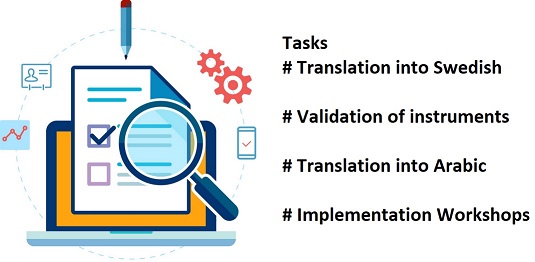
Masters project being offered
Type of project being offered: Secondary data analysis required.
You will be working with a small team to analyse data from a telemedicine project.
Pediatric patients with we diabetes were offered the chance to participate in a telemedicine service to complement their normal healthcare provision. Patients were divided into two groups one group (n=52) received telemedicine help, a seocnd control group (N=48) received normal healthcare. Pediatric patients(8-17 yrs) & parents of children (3-8yrs) have completed a number of questionnaires during the 24 month study. This project will compare the PROMIS profile-25 (a standard measure of health) with the generic Quality of life instrument - Kidscreen and the disease specific instrument - Disabkids. **This will be a validation study of the newer PROMIS questionnaire instrument.** Other instruments that can be used to enrich the understanding of the differences or similarities will be a measure of locus of control (LOC), and a measure of confidence in diabetes care (CID) and the Diabetes Treatment Satisfaction Questionnaire (DTSQ).-
Study design:
This was a cross-sectional study using a cohort of well-described patients with diabetes with the aim to assess the construct validity for discriminative purposes of a new PRO instrument. Construct validity according to COSMIN terminology is defined as “the degree to which the scores of a health related-Patient Reported Outcome (HR-PRO) instrument are consistent with hypotheses (for instance with regard to internal relationships, relationships to scores or other instruments, or differences between relevant groups) based on the assumption that the HR-PRO instrument validity measures the construct to be measured”. We hypothesize that PROMIS-25 and Kidscreen / Disabkids will demonstrate construct validity because these instruments were designed to cover as full a range of the latent variable which together can constitute a measure of health and quality of life. -
You will be:
This study will require an interest and knowledge of statistics and familiarity with the SPSS statistics programe. Tests applied will be pearson correlation, t-tests and multiple linear regression. Experience to be gained:
You will be working with pediatric clinicians in a real world setting on issues of questionnaire development, validity and reliability. The field will include the area of telemedicine which is an area of future development within public and global health. You will learn about database management, use of standardised questionnaires to measure self-reported health from patients, new methods of questionnaire construction enploying modern psychometric techniques such as Item Response Theory.- _
Supervisor:
John Chaplin Associate Professor. Inst. for Clinical Sciences, GU. Contact:

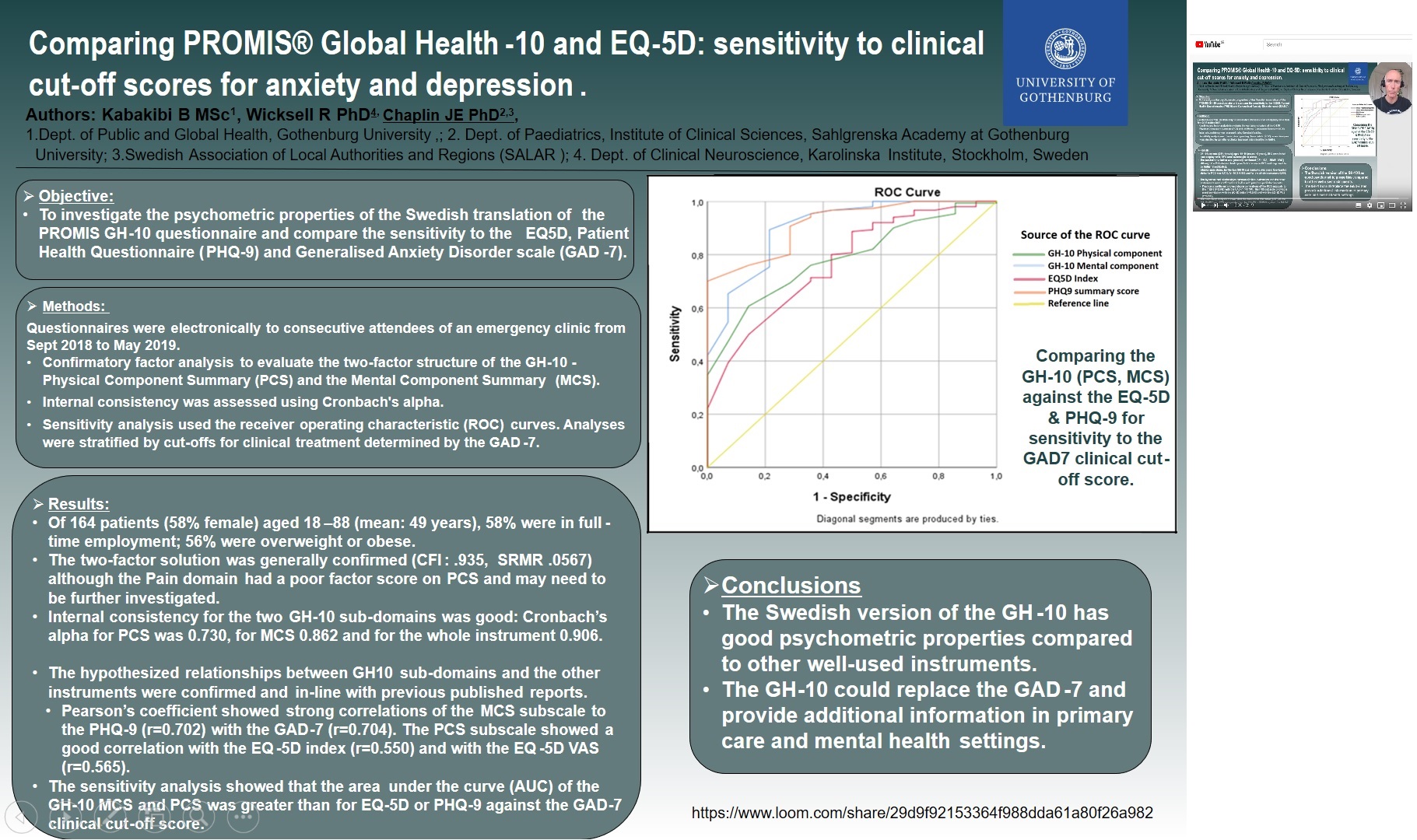

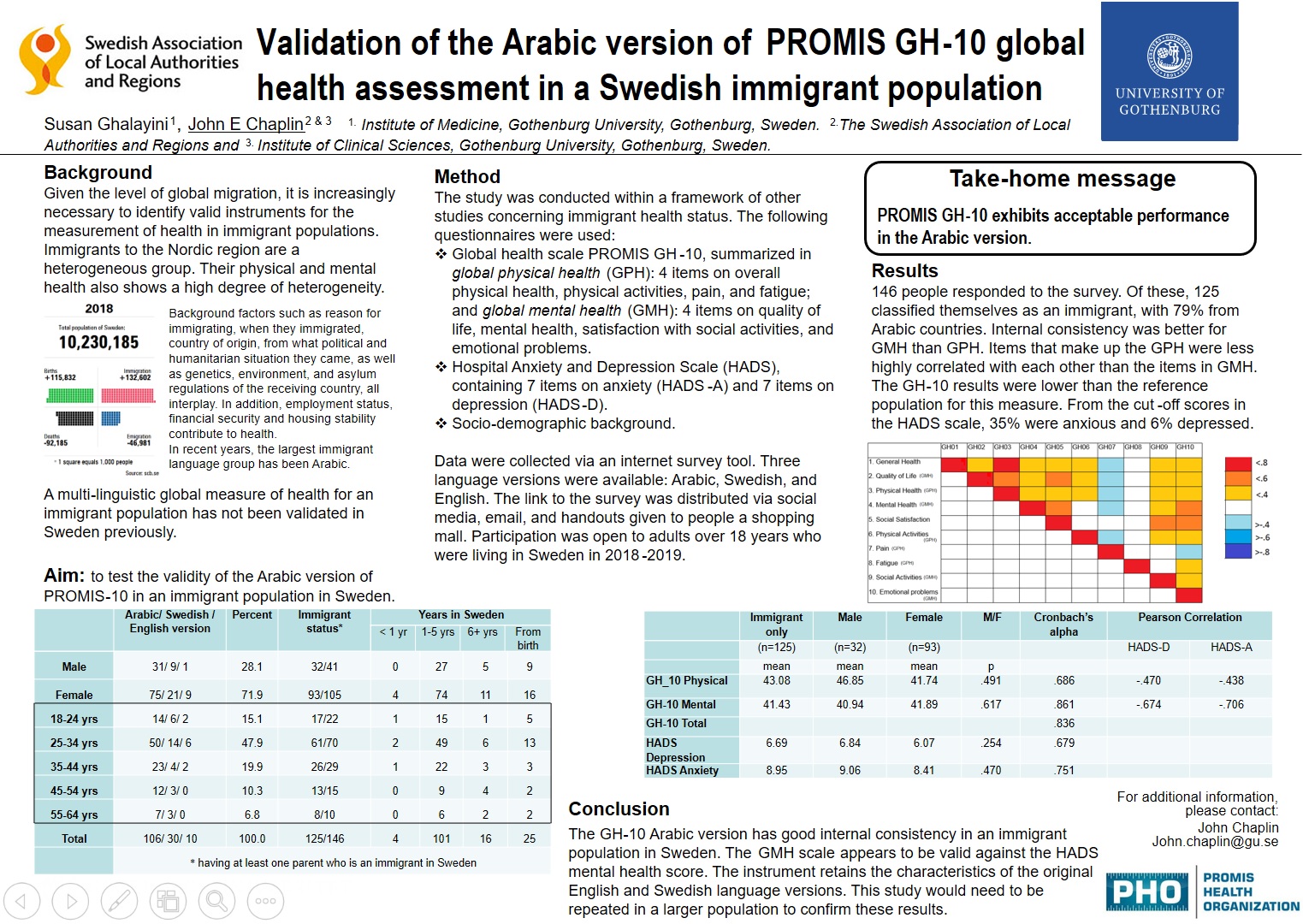
Other materials
Patientrapporterade mått - itembanker
Itembanker (frågebanker, dvs databaser innehållande ett stort antal frågor om hälsa, funktions-förmåga och livskvalitet) är det nya moderna sättet att använda patientrapporterade mått. För att respondentbördan inte ska bli för stor kan ett traditionellt frågeformulär som används som ett patientrapporterat mått inte innehålla för många frågor (man brukar rekommendera 10-20 frågor). Därmed kan ett ensamt frågeformulär inte förväntas både kunna täcka in hela hälsospektret från sämsta till bästa hälsa, och samtidigt ge detaljerad information om varje specifikt hälsotillstånd. Ofta kan man därför behöva kombinera flera olika frågeformulär när det finns en stor spännvidd i hälsan i en patientgrupp (vilket ofta är fallet). Nackdelen är att det blir väldigt många frågor (ökad börda), och många patienter behöver svara på frågor som inte är relevanta för just dem.
Lösningen på dessa problem är itembanken, som eftersom den kan innehålla hur många frågor som helst och passar alla hälsonivåer inom den hälsodomän man önskar mäta. Genom användningen av sk CAT-teknik (Computerized Adaptive Testing; ett datorprogram väljer ut individanpassade frågor utifrån svaret på föregående frågor), ringas först in var i hälsospektret patienten befinner sig (hög eller låg hälsonivå). Därefter väljer datorprogrammet ut frågor som ger detaljerad information runt just den hälsonivå som en specifik patient befinner sig på, vilket ger ett mätresultat med mycket hög mätprecison. Dessutom uppnås denna högre mätprecision med färre antal frågor (ofta räcker det med 5-6 frågor) och man slipper irritera respondenterna med för dem irrelevanta frågor. Metodiken ger också en bättre uppfattning om vad det är som egentligen är problemet för patienterna (varje fråga kan nämligen även värderas separat eftersom itembanken är baserad på modern itemresponsteori, IRT), och inte bara vilken nivå de ligger på. En annan fördel är att alla kan använda samma patientrapporterade mått, vilket underlättar nationella diagnos-överskridande jämförelser och lärande inom hälso- och sjukvården.
I USA har National Institute of Health, NIH, initierat och bekostat framtagandet av en omfattande itembank inom hälsoområdet, Patient-Reported Outcomes Measurement Information System (PROMIS). Allt fler länder runt om i världen intresserar sig nu för att implementera denna bank (som utökas kontinuerligt, men så här långt inkluderar ett 60-tal hälsodomäner inom fysisk, psykisk och social hälsa, för både vuxna och barn), så även Sverige, vilket kommer att ge rika möjligheter till internationella samarbeten och jämförelser. Förutom användning av CAT-teknik enligt ovan kan frågorna i PROMIS även användas i fasta kortformer, antingen sådana som redan skapats av PROMIS (4-8 frågor i varje) eller sådana som anpassas efter ens egna behov.
Den Nationella Kvalitetsregisterorganisationen har finansierat det initiala arbetet med implementeringen av PROMIS i Sverige, men en bred satsning inom svensk hälso- och sjukvård behövs framöver. Givet Sveriges övriga satsningar inom patientrapporterade mått och nationell IT-struktur har vi med svenska PROMIS inte bara en chans att optimera den nationella användningen av patientrapporterade mått utan också att ligga i frontlinjen i den internationella utvecklingen.
Other materials
Program här.
Powerpoint-presentation här.
Presentation i QRCs Youtube-kanal. Filmen är 56 minuter. Till filmen.